Products How It Works Global Shipping Certificates Blog FAQ Distributor Inquiry Export Inquiry
From the VetPet Care Blog

All guides for cat owners, distributors & importers

Every article we've published, newest first - cat care tips, buying guides, product care advice, and export/trade resources.

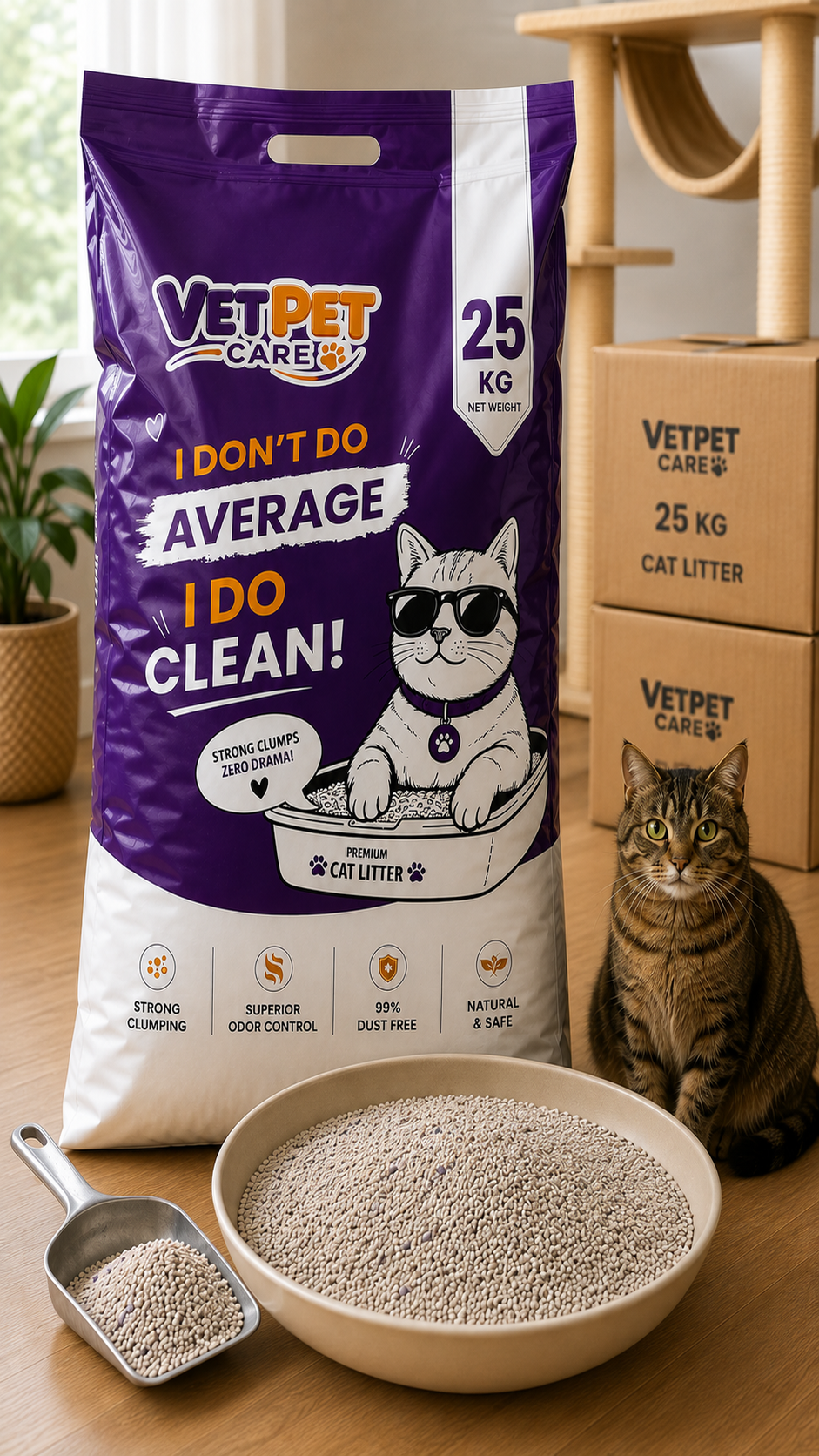
25kg bulk bags of VetPet Care bentonite cat litter staged for export alongside packed cartons
Export & Trade

Cat Litter HS Code & Import Duty: A Guide for International Buyers

Get the customs classification wrong and a shipment can sit at port racking up fees. Here's the HS code importers typically use, and what actually shapes the duty you'll pay.

Read the full guide

Bentonite cat litter is typically classified under HS heading 2508 (clays), most often at the 2508.10 subheading, though the exact national tariff code varies by country and should be confirmed with a customs broker. Beyond the code itself, the duty you pay depends on the destination country's tariff schedule, country of origin, declared customs value, and whether a trade agreement applies. Customs authorities commonly request a Certificate of Analysis and Safety Data Sheet alongside the standard shipping documents - VetPet Care provides both for every export order.
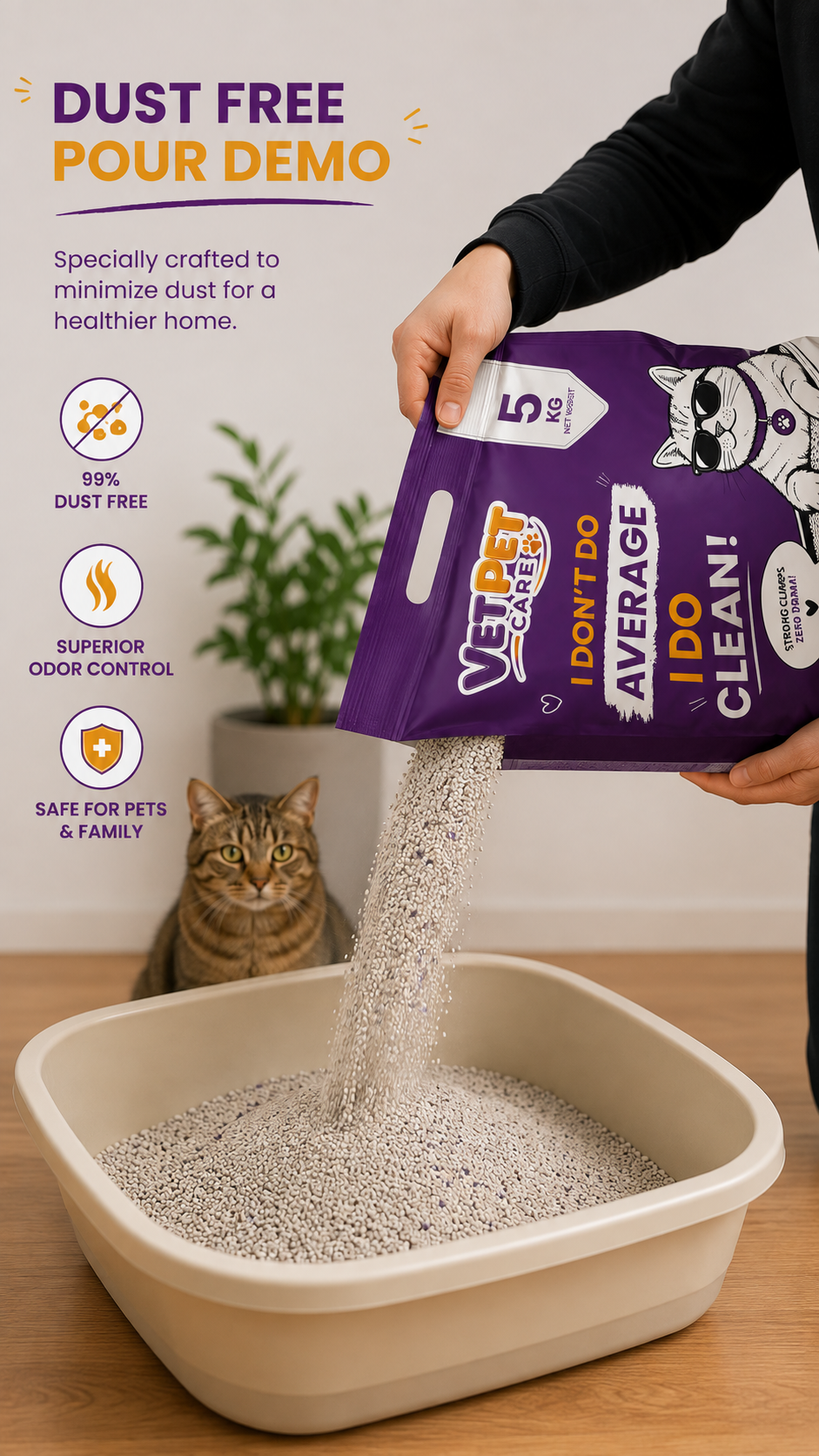
Pouring 99% dust-free bentonite cat litter into a tray with no visible dust cloud
Product Care

Is Cat Litter Dust Bad for Cats and People? What "Dust-Free" Really Means

That fine cloud when you pour a bag isn't just messy - it's the same dust your cat breathes in every time it digs. Here's what it actually does, and what "dust-free" means.

Read the full guide

Cat litter dust is fine clay or silica particulate left over from processing, and repeated exposure can irritate airways in both cats and people, worsening feline asthma or human allergy symptoms over time. A genuine "99% dust-free" claim means the fine fraction has been removed during manufacturing, verified by a clean pour test with no visible cloud - not a promise of literal zero dust. Choosing a verified low-dust formula, pouring close to the tray, and keeping the litter area ventilated all reduce exposure at the source.

Unboxing a 5kg starter bag of cat litter suited for kittens and new cat owners
Cat Care Tips

Best Cat Litter for Kittens: A Safety-First Buying Guide

A kitten's litter needs aren't just a smaller version of an adult cat's. Here's why young kittens need non-clumping litter, and when it's safe to switch.

Read the full guide

Young kittens explore with their mouths, so vets recommend non-clumping paper, wood, or clay litter until a kitten is about 8-12 weeks old, since clumping bentonite can swell and cause a blockage if swallowed in quantity. Once a kitten is a few months old and reliably using the box without eating litter, owners can transition to a dust-free clumping bentonite for stronger odor control. Pairing the right litter type with a small, low-sided box filled to just 1-2 inches makes the switch to full adult litter habits smoother as the kitten grows.

Litter tray odor control results 24 hours after use with VetPet Care bentonite clumping litter
Product Care

The Science of Cat Litter Odor Control: What Actually Works

Most "odor control" claims are just fragrance. Here's the real chemistry behind litter box smell, and which formulas actually stop it at the source.

Read the full guide

Litter box odor is mostly ammonia, produced when bacteria break down urea in cat urine — fresh urine itself has little smell. Litter fights this three ways: clumping isolation traps and removes waste entirely, mineral adsorption pulls odor compounds into a porous structure, and moisture absorption slows the bacterial activity that produces ammonia in the first place. Fragrance sits on top of these mechanisms rather than replacing them, which is why a heavily scented but poorly formulated litter can still smell within hours. VetPet Care's 99% dust-free bentonite relies on tight clumping to remove the ammonia source on each scoop, with fragrance as a secondary layer rather than the main defense.

Silica gel crystal litter compared side by side with bentonite clumping clay litter
Buying Guide

Silica Gel vs Bentonite Cat Litter: Which Is Actually Better?

Crystal or clumping clay? Here's a balanced, head-to-head look at odor control, dust, cost per use and environmental impact to help you choose.

Read the full guide

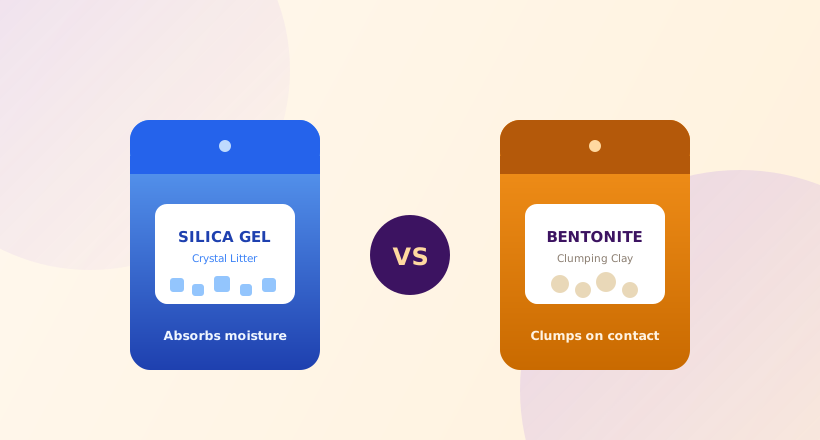
Silica gel litter absorbs moisture into crystal granules rather than clumping, so owners typically rake out solids daily and follow a fixed full-change schedule - often at a higher price per bag. Bentonite clay swells and binds into a firm clump around waste, letting you scoop just the soiled portion daily and replace the litter every few weeks, usually at a lower price per bag. Neither is universally better: bentonite tends to suit multi-cat households and cost-conscious buyers, while silica gel appeals to single-cat owners who prefer fewer full changes.

Multi-cat household litter trial with several cats sharing litter boxes
Cat Care Tips

Best Cat Litter for Multi-Cat Households

Odor compounds fast and boxes fill up faster with multiple cats. Here's how many boxes you need, which litter holds up, and how to stop shared-box conflicts.

Read the full guide

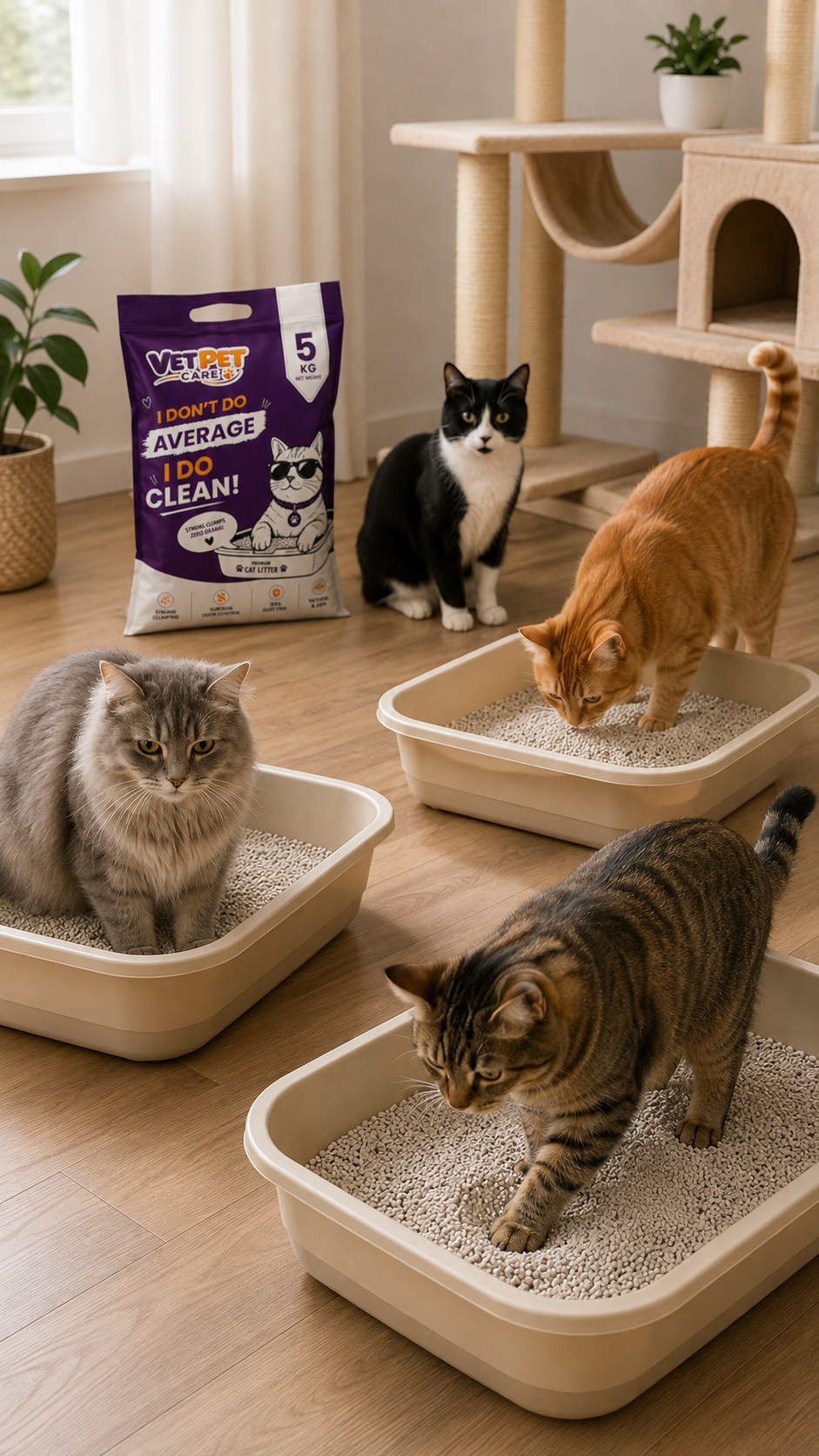
The standard rule for multi-cat homes is one litter box per cat, plus one extra, spread across separate low-traffic locations rather than lined up in a single room. Litter choice matters more under heavier daily use: clumping bentonite outperforms non-clumping clay and silica crystal because it isolates waste into removable clumps, letting a box stay usable between full changes even with two or three cats sharing the home. Scooping every box twice daily and doing a full change every 1-2 weeks - rather than the 3-4 week single-cat schedule - prevents the odor and avoidance cycle that leads to litter box problems in multi-cat households.

Cat litter container loading guide for 20ft and 40ft export containers
Export & Trade

Cat Litter Container Loading Guide: 20ft vs 40ft Capacity

Planning a full container order? Here's how many bags of cat litter actually fit in a 20ft or 40ft container, and why weight limits matter more than volume.

Read the full guide

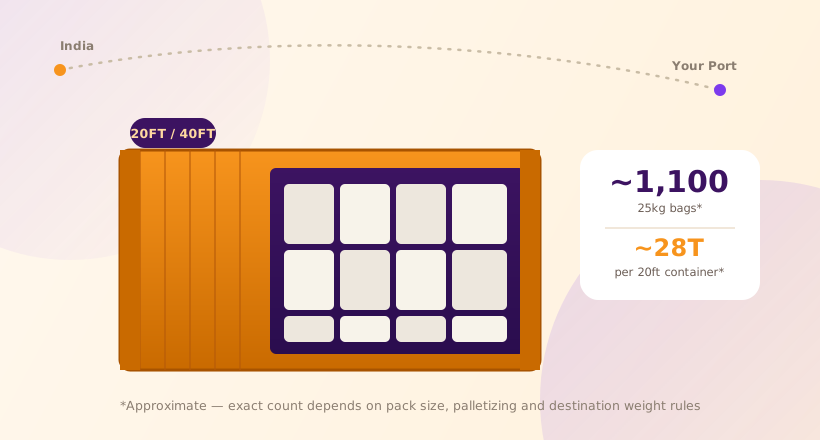
Bentonite cat litter is dense enough that a container usually hits its legal road-weight limit before its internal volume is full, which means a 20ft container typically carries a similar tonnage to a 40ft container for a pure cat litter shipment — roughly 1,000 to 1,100 bags of 25kg litter, or around 26-28 tons. That makes 20ft the more cost-efficient booking for single-product orders, while 40ft only pays off when combined with lighter, bulkier cargo. VetPet Care plans exact loading and FOB/CIF pricing once your pack size mix and destination port are confirmed.

Private label and OEM cat litter manufacturing in India
Export & Trade

Private Label Cat Litter Manufacturing in India: OEM Guide for Global Brands

Want to sell cat litter under your own brand? Here's how private label and OEM manufacturing works, what's customizable, and how to launch from sample to full container.

Read the full guide

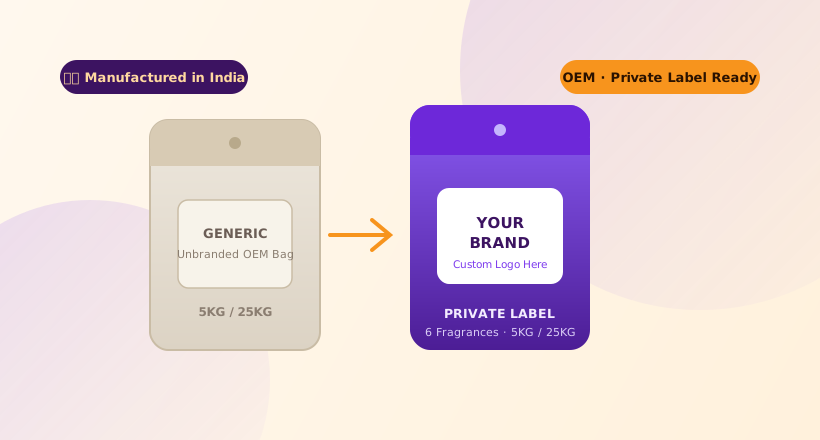
Private label manufacturing lets a brand owner put their own name and artwork on an established bentonite formulation instead of building a factory from scratch. Buyers can typically choose fragrance from the manufacturer's existing range, pick between 5kg retail and 25kg bulk pack sizes, and start with a sticker label over a plain bag to keep first-order MOQ low before moving to fully custom-printed packaging. VetPet Care runs private label and OEM programs on the same production line used for its own brand, with samples, FOB/CIF pricing and MOQ confirmed once destination and target volume are known.

VetPet Care unboxing the 5kg bag, 5kg bag front packaging
Cat Care Tips

How to Stop Cat Litter Tracking Through Your House

Gritty granules on the hallway floor aren't a "messy cat" problem - they're a mat, box setup, and litter choice problem. Here's what actually works.

Read the full guide

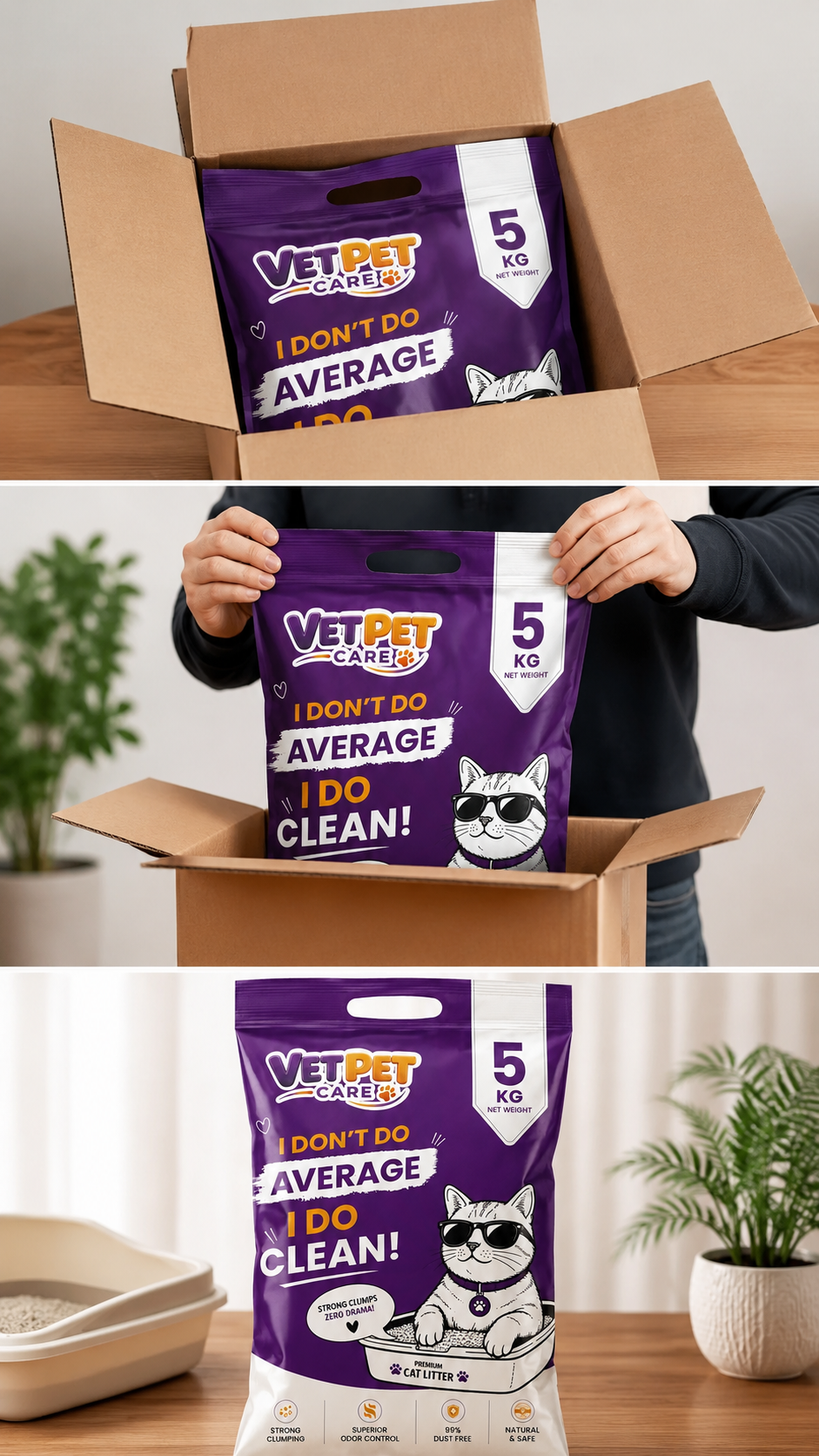
Most litter tracking comes down to three fixable factors: a ridged trapping mat placed directly at the box exit, a high-sided or covered box that contains kicked litter, and a dust-free, uniform-granule clumping litter that resists crumbling underfoot. VetPet Care's 99% dust-free bentonite uses rounded, consistent granules designed to reduce exactly this kind of tracking while staying gentle on sensitive paws.

VetPet Care unboxing the 5kg bag, 5kg bag front packaging
Export & Trade

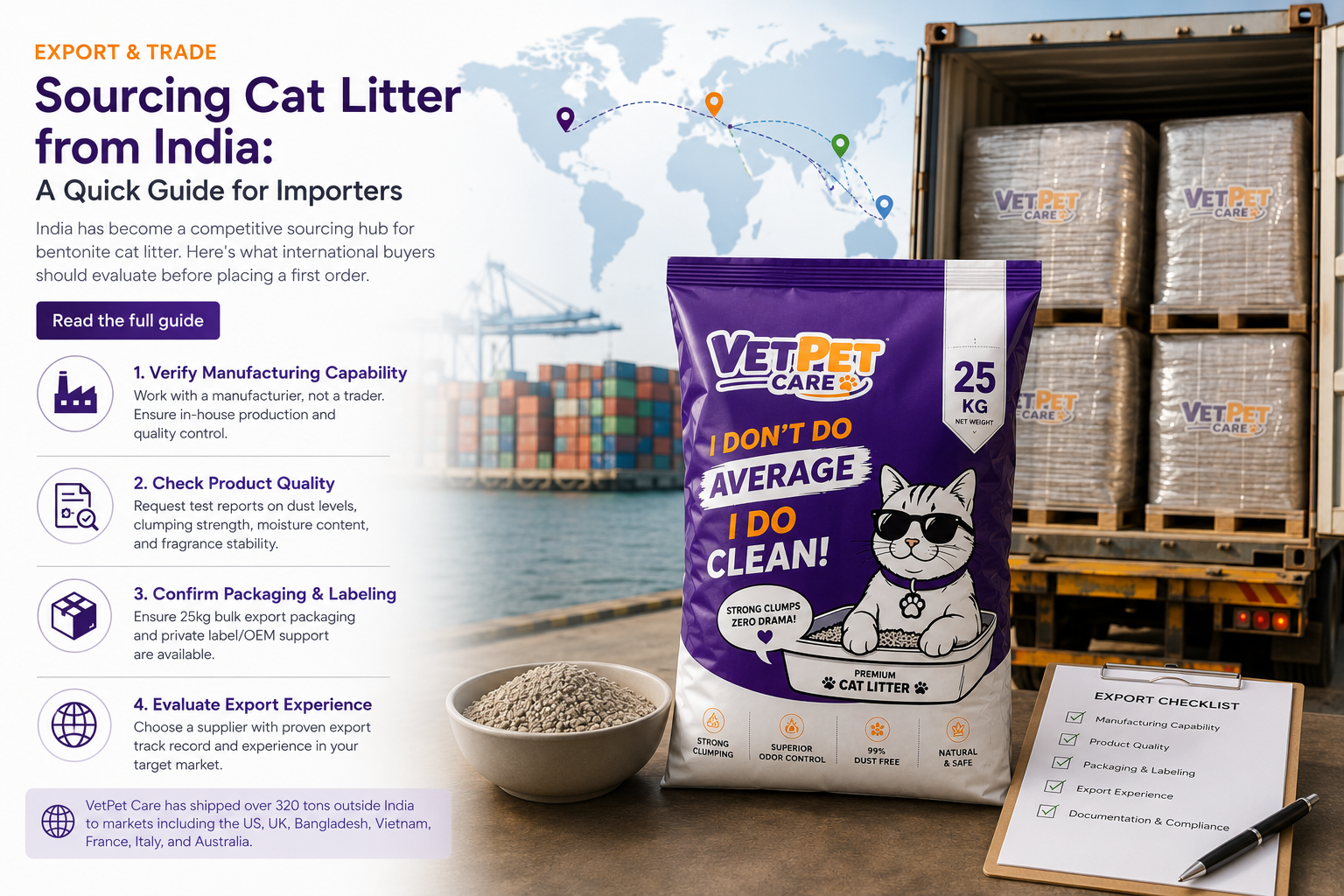
Sourcing Cat Litter from India: A Quick Guide for Importers

India has become a competitive sourcing hub for bentonite cat litter. Here's what international buyers should evaluate before placing a first order.

Read the full guide

India's bentonite reserves and manufacturing costs make it an increasingly attractive sourcing base for cat litter importers in markets like the US, UK, and EU. When evaluating a manufacturer, buyers should confirm direct production capability rather than trading-only status, request documentation on dust levels and clumping strength, and clarify whether 25kg bulk export packaging and private labeling are supported. VetPet Care, for example, manufactures and packs its own bentonite litter and has shipped over 320 tons outside India to date, across markets including the US, UK, Bangladesh, Vietnam, France, Italy, and Australia - a track record worth asking any prospective supplier to match.

VetPet Care unboxing the 5kg bag, 5kg bag front packaging
Product Care

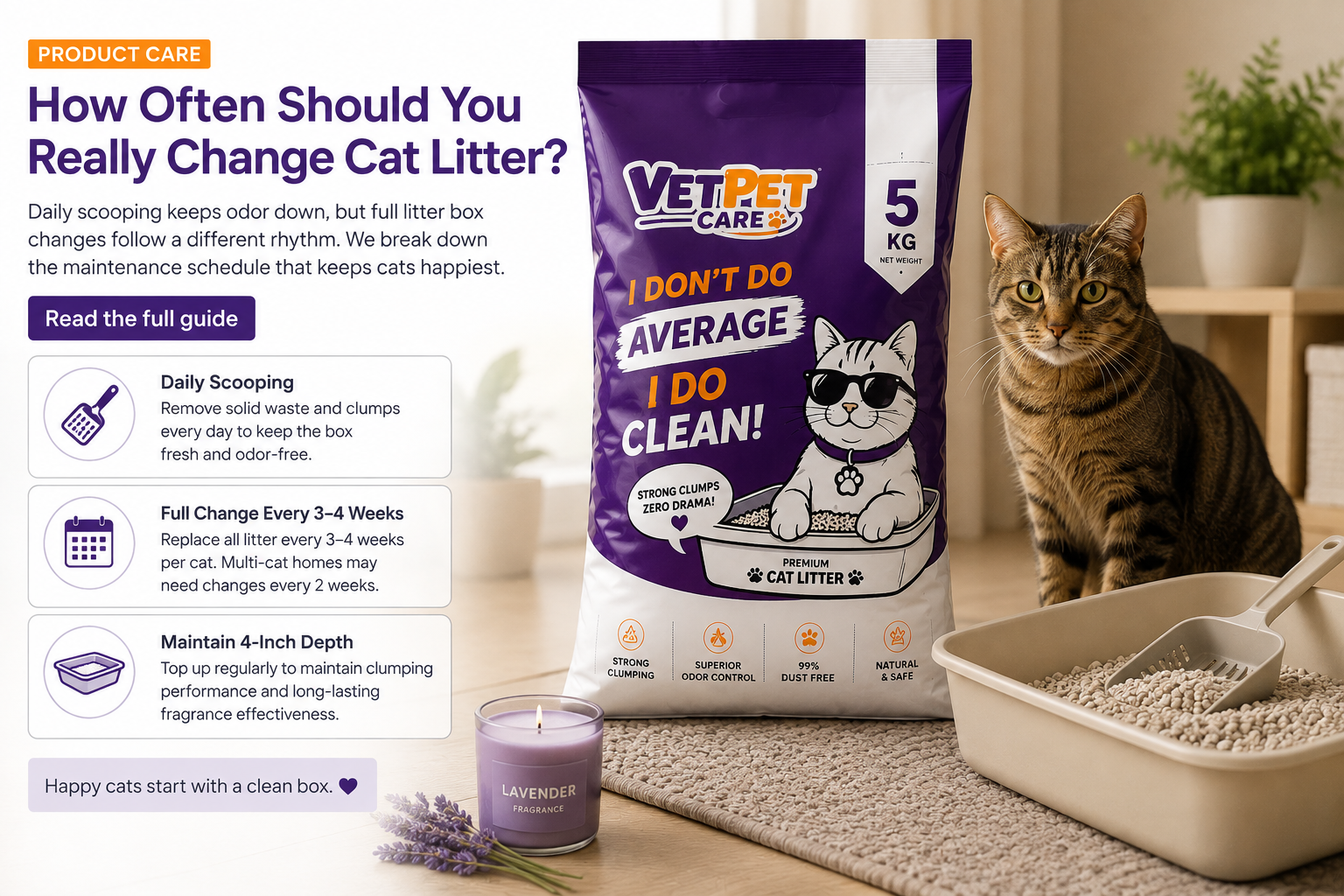
How Often Should You Really Change Cat Litter?

Daily scooping keeps odor down, but full litter box changes follow a different rhythm. We break down the maintenance schedule that keeps cats happiest.

Read the full guide

Most clumping litter, including VetPet Care's bentonite formula, is designed for daily scooping and a full replacement every 3 to 4 weeks per cat using the box. Multi-cat households or smaller trays may need a full change closer to every 2 weeks, since waste concentration accelerates odor buildup regardless of scent variant. Topping up litter to the recommended 4-inch depth between full changes maintains clumping strength and helps the fragrance layer - whether Lavender, Jasmine, or Non-Scented - stay effective for longer between replacements.

VetPet Care unboxing the 5kg bag, 5kg bag front packaging
Buying Guide

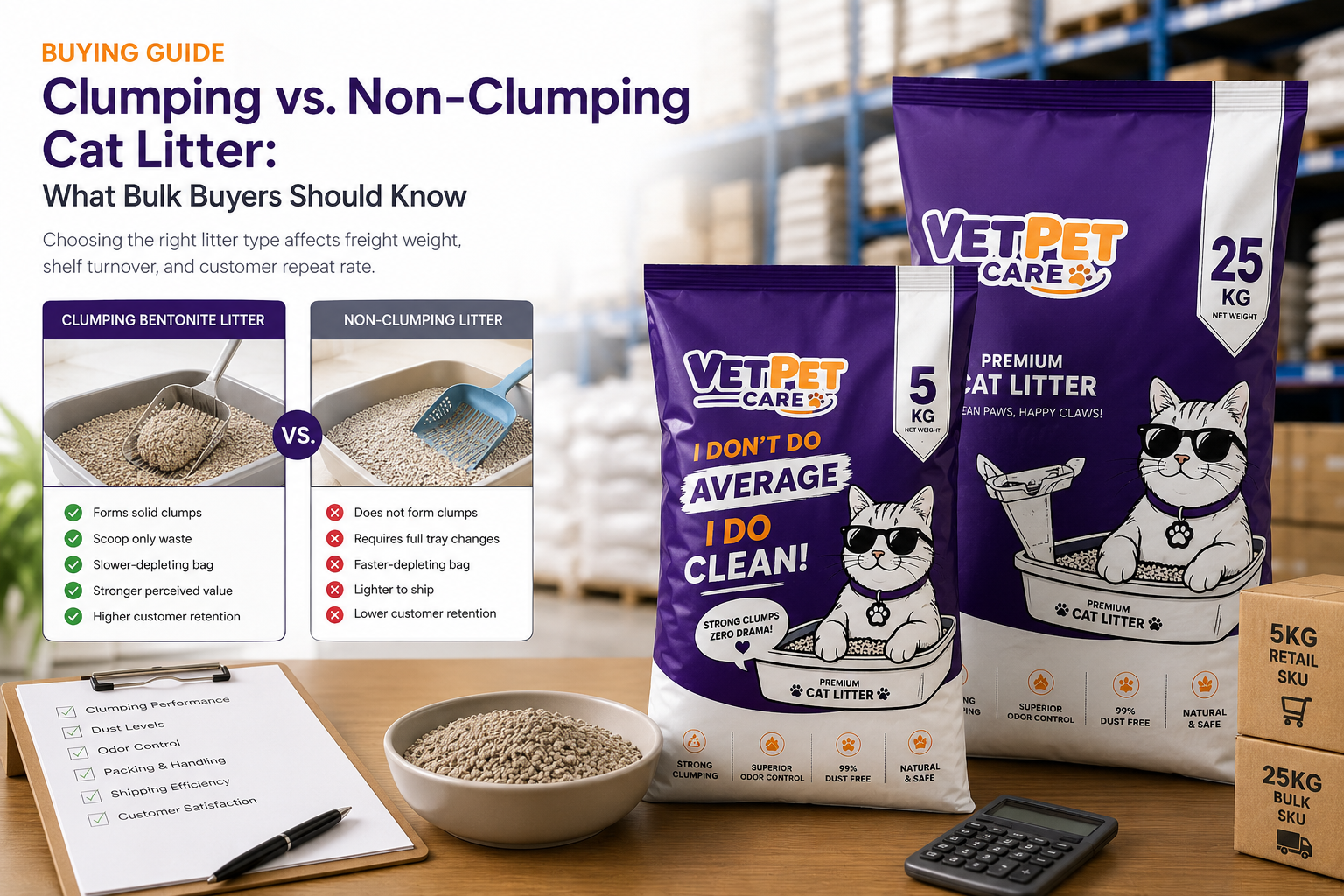
Clumping vs. Non-Clumping Cat Litter: What Bulk Buyers Should Know

Choosing the right litter type affects freight weight, shelf turnover, and customer repeat rate. Here's how clumping bentonite compares for importers and retailers.

Read the full guide

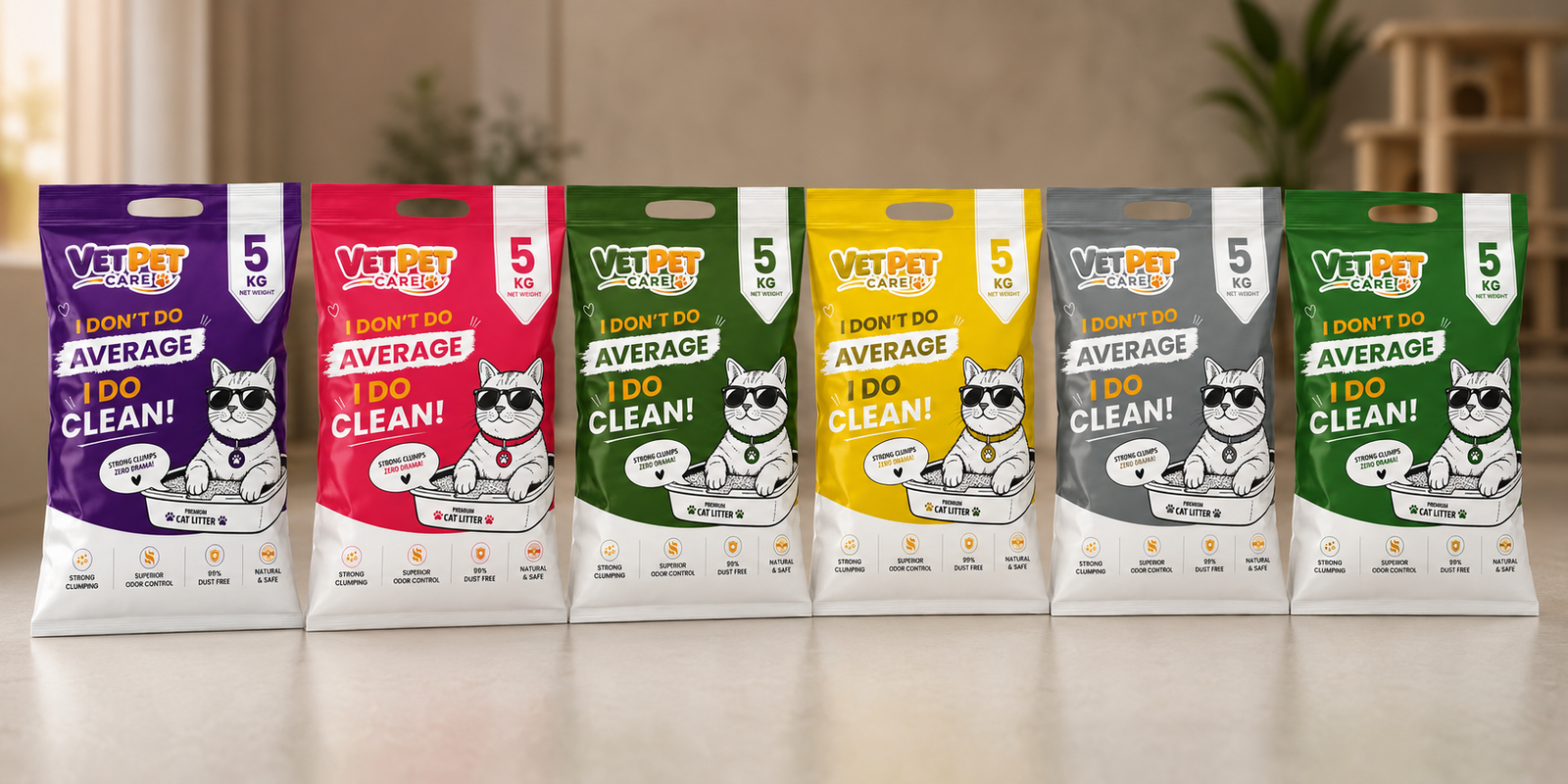
Clumping bentonite litter forms solid clumps around waste on contact, letting owners scoop only the soiled portion instead of replacing the entire tray. For distributors, that translates into a slower-depleting bag and stronger perceived value versus non-clumping silica or clay alternatives. Non-clumping litter is typically lighter to ship but requires full changes more often, which can hurt long-term customer retention. For import partners evaluating SKUs, clumping bentonite in 5kg retail and 25kg bulk formats - like VetPet Care's range - tends to perform best across both price-sensitive and premium shelf placements, since one formulation serves multiple price points through pack size alone.