Best Cat Litter for Multi-Cat Households
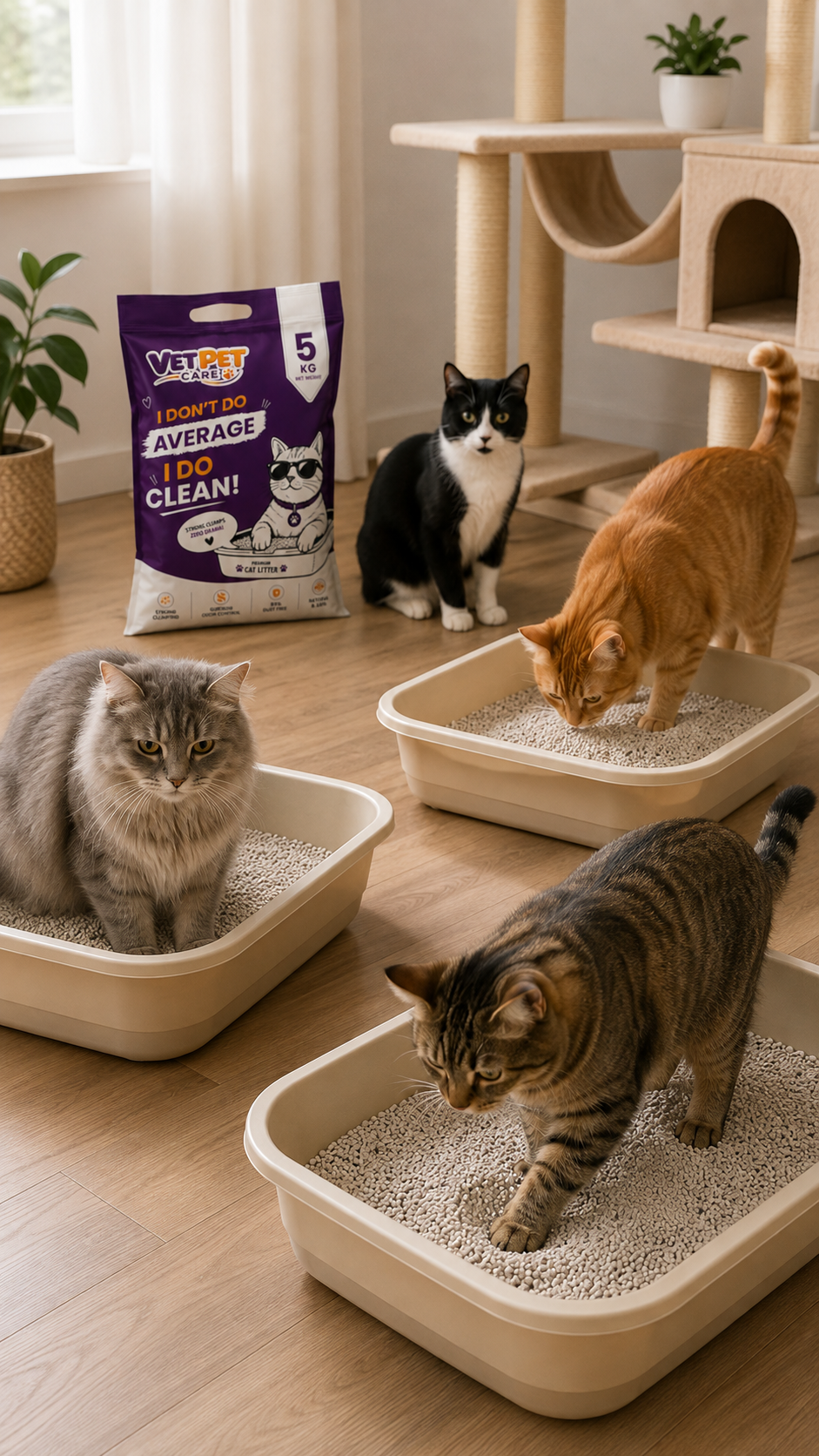
One cat is easy. Three cats sharing a home is a different problem entirely — odor compounds fast, boxes fill up faster, and cats start avoiding a tray that smells wrong to them long before it smells wrong to you. Here's how to set up litter, boxes, and cleaning routines so a multi-cat home stays fresh and every cat actually uses the box.
In this guide
How many litter boxes do you actually need?
The rule vets and behaviorists rely on is simple: one litter box per cat, plus one extra. Two cats need three boxes, three cats need four, and so on. It sounds excessive until you consider why it works — cats are territorial about elimination spots, and a shared box that's already been used is a common reason a cat looks for a corner of the house instead.
The extra box isn't a luxury. It's the buffer that lets a cat avoid a box another cat just used, without resorting to the carpet.
Choosing the right litter for multiple cats
Litter type matters more in a multi-cat home because every box sees heavier use per day. A litter that's fine for one cat can fall apart under the load of three.
| Litter type | Odor control under heavy use | Full change frequency (2-3 cats) | Cost per cat |
|---|---|---|---|
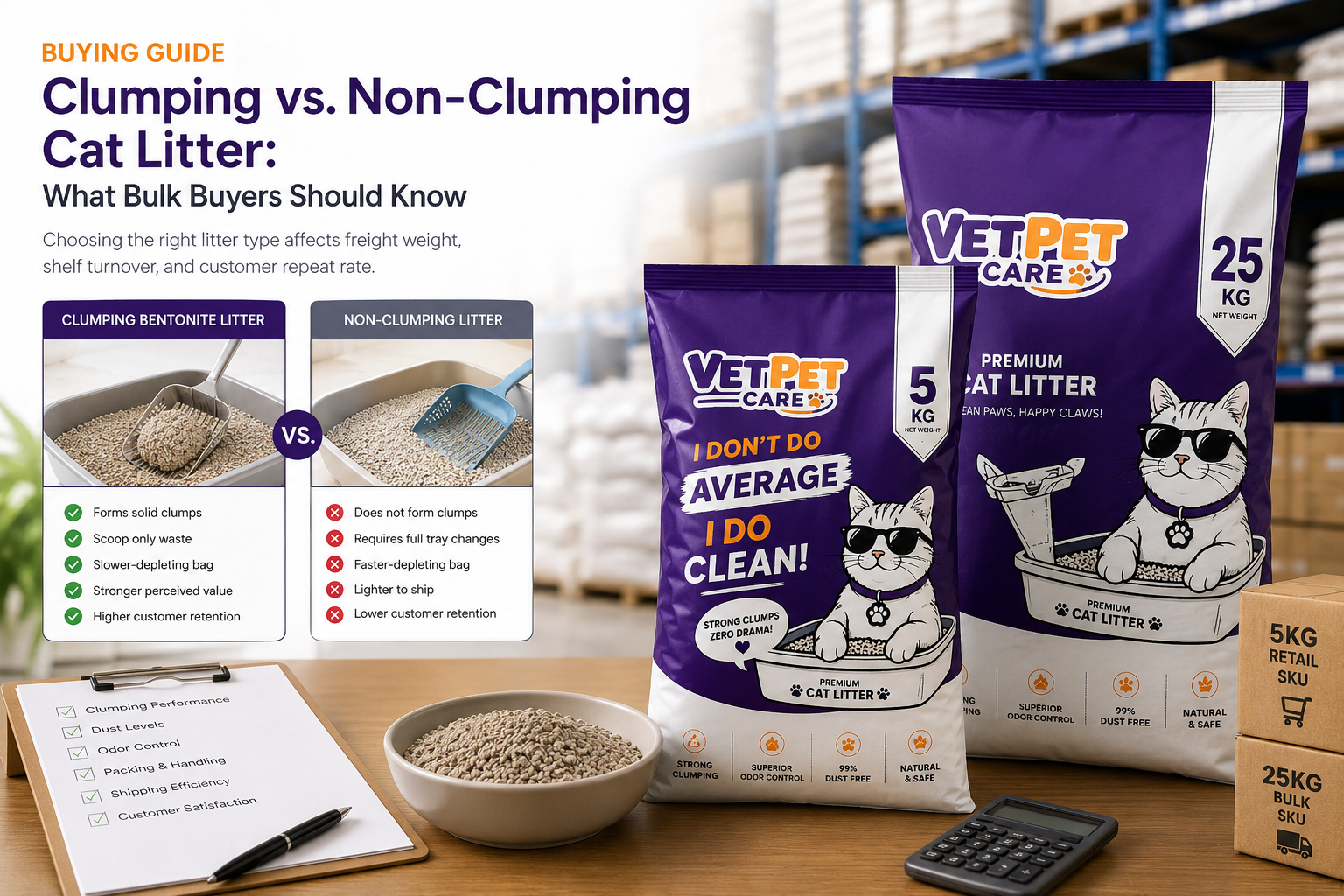
| Clumping bentonite | Strong — waste is isolated in removable clumps | Every 1-2 weeks | Low to moderate |
| Non-clumping clay | Weak — odor spreads through the whole tray | Every 3-5 days | Low, but replaced more often |
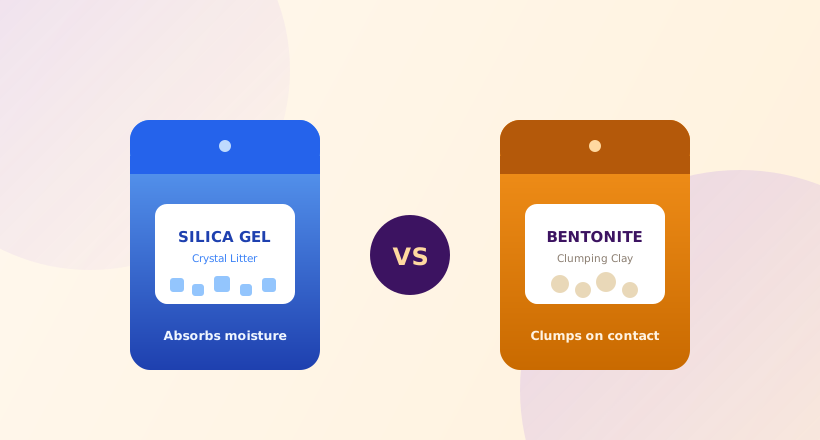
| Silica gel / crystal | Good for moisture, weaker for solid waste odor | Every 2-3 weeks | High |
Clumping bentonite generally wins for multi-cat homes because it's the only type that lets you remove exactly the soiled portion after each use, keeping the surrounding litter clean and the odor contained between full changes.
Box placement and setup
- Spread boxes across the home. Don't line them up in one room — cats can still "guard" a whole row of boxes from a single doorway.
- Pick quiet, low-traffic spots. A box near a noisy appliance or a busy hallway gets avoided, no matter how clean it is.
- Match box size to your largest cat. A box that's too small for one cat in the household will get skipped by that cat even if smaller housemates use it fine.
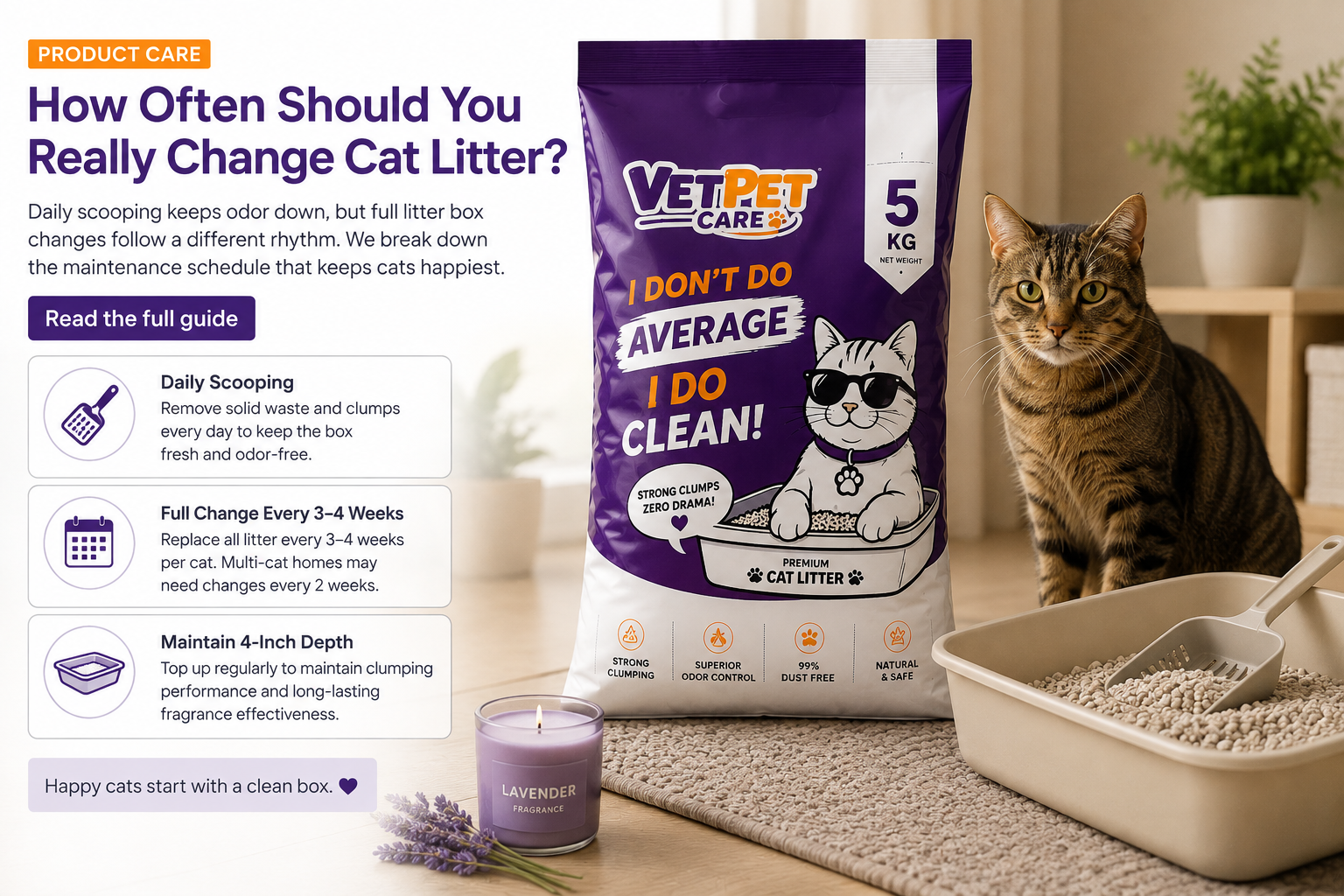
- Fill to a consistent 4-inch depth. This holds true whether it's a single box or six — shallow litter breaks down clumping performance fast under heavier use.
Managing odor and shared-box conflicts
With multiple cats, odor and behavior problems are usually the same issue wearing two faces. A box that smells bad to a cat gets avoided, and an avoided box then sits unused and smells worse. Break the cycle with:
- Scooping twice daily, every box. This single habit prevents most multi-cat litter problems before they start.
- Watching for one cat guarding the boxes. If a dominant cat blocks access, add a box in a separate room that cat doesn't control.
- Doing full changes more often than a single-cat schedule. Every 1-2 weeks is typical for 2-3 cats, versus 3-4 weeks for one.
- Choosing a low-dust, strong-clumping formula. Less dust means less irritation across multiple cats with different sensitivities, and firm clumps keep the tray usable between scoops.
Stocking litter for catteries, shelters, or multi-cat retail demand?
VetPet Care manufactures 100% natural bentonite clumping litter in 5kg and 25kg bags, six fragrances, with private label options for distributors serving high-usage households. Get export pricing within 24 hours.
Request Export Pricing →