How to Read a Cat Litter Certificate of Analysis: A Buyer's Guide
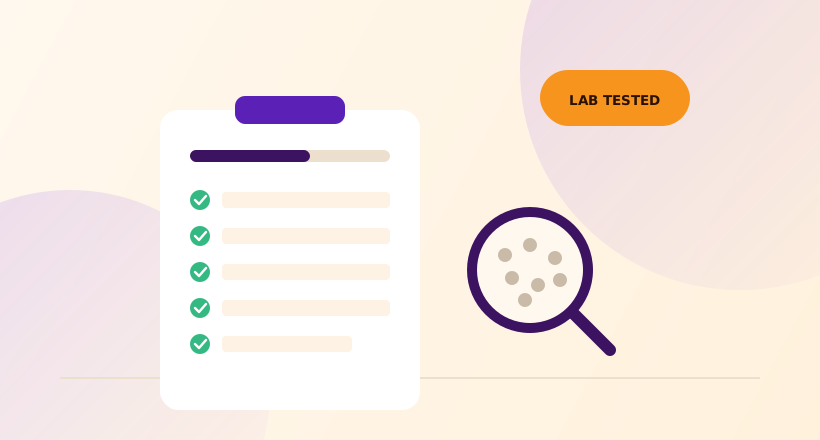
Every reputable cat litter manufacturer can hand you a Certificate of Analysis on request - but a page full of percentages and technical terms isn't useful if you don't know what you're actually looking at. Here's what each line on a typical COA means, and what numbers separate a genuinely strong formula from an average one.
In this guide
What a Certificate of Analysis actually is
A Certificate of Analysis is a quality document a manufacturer issues summarizing the tested specifications of a product — in this case, bentonite cat litter. It typically shows two columns: the specification (the manufacturer's quality promise) and the typical result (what recent production batches actually measured). The gap between those two columns tells you how consistently a supplier hits its own claims.
A COA is not a safety certificate or a regulatory approval — it's a quality snapshot. For safety and handling information, buyers should also request a Safety Data Sheet (SDS), which covers a different set of questions entirely.
Physical properties, explained
This is the section most buyers care about most, since it predicts how the litter will actually perform in a litter box.
| Parameter | What it measures | What's a strong number |
|---|---|---|
| Water absorption capacity | How much liquid the clay absorbs relative to its own weight | 250% or higher |
| Colloid (swell) value | How much the clay physically swells on contact with moisture | 130% or higher |
| Clumping time | How quickly a firm, scoopable clump forms | 60 seconds or less, ideally 30-45 seconds |
| Dust rate | Airborne fine particulate released during handling | Under 1% ("99% dust-free") |
| Granule size | Consistency of particle size across the batch | A tight, uniform range (e.g. 1.0-3.5mm) |
| Bulk density | Weight per volume, affects freight planning | Typically 0.75-0.90 g/ml for bentonite |
Of these, water absorption and dust rate are the two numbers worth scrutinizing most closely — they correlate directly with real-world clumping performance and the health/cleanliness complaints that drive product returns.
Chemical composition (XRF), explained
X-ray fluorescence (XRF) analysis breaks down the mineral composition of the clay — typically silica, alumina, iron oxide, magnesium oxide, calcium oxide, and trace oxides. For most buyers, this section matters less for day-to-day purchasing decisions and more for confirming the product is genuinely natural bentonite rather than a diluted or synthetic substitute, and for markets with specific import documentation requirements.
There's no single "correct" XRF profile — composition varies naturally by mining region — but a consistent profile across multiple COAs from the same supplier is a good sign of stable sourcing.
Other sections worth checking
- Moisture content. Typically 8-12% for bentonite litter; higher moisture content on arrival can mean the product was improperly stored or shipped.
- pH. Usually alkaline, around 8.5-10, which is inherent to bentonite and not an adjustable quality lever.
- Odor control claims. Look for a stated test method (e.g. "no detectable ammonia odor at 24 hours") rather than a vague marketing claim with no test basis.
- Shelf life and storage. Confirms how long the batch is expected to perform to spec — see our guide to cat litter shelf life for more on what affects this over time.
How to verify a COA is trustworthy
A COA is only as reliable as the relationship behind it. A few practical steps separate a real quality document from a copy-pasted spec sheet:
- Ask for a batch-specific COA tied to the actual production run for your order, not a generic company-wide document that may be outdated.
- Confirm the manufacturer is a direct producer, not a trading company reselling someone else's product under a COA they didn't generate themselves.
- Request samples alongside the COA and test clumping time and dust visually before committing to a full order.
- For large or repeat orders, consider third-party lab verification — an added cost, but one some importers build into high-volume or private-label contracts.
VetPet Care issues a standard Certificate of Analysis and Safety Data Sheet for every product line, with batch-specific documentation available against a confirmed purchase order — you can request a copy of both here.
Need our full documentation?
Request VetPet Care's Certificate of Analysis and Safety Data Sheet, and our team will email both directly to your inbox within 24 hours.
Request Documents →