How to Stop Cat Litter Tracking Through Your House
Finding gritty granules on the hallway floor, the sofa, or even the kitchen counter is one of the most common complaints from cat owners. Litter tracking is almost never about a "messy" cat - it's about box setup, mat placement, and the litter itself. Here's what actually works.
In this guide
Why cats track litter out of the box
When a cat digs to bury waste, loose granules and dust lodge between the fur and pads of their paws. As they walk away from the box, those particles drop off - usually within the first few steps, but sometimes much further if the cat jumps onto furniture right after using the box. Three factors make this worse:
- Fine or dusty litter clings to fur more easily than larger, drier granules.
- Low-sided or open boxes let more litter get kicked or carried straight over the edge.
- No transition zone at the box exit means the first tracked granules land directly on bare floor or carpet.
Mat placement that actually catches litter
A trapping mat only works if it's positioned where paws actually land:
- Place the mat directly against the box entrance - not a few inches away - so the cat has to step on it leaving the box.
- Choose a honeycomb or ridged texture over a flat mat; the raised cells pull granules off paw pads instead of letting them slide across.
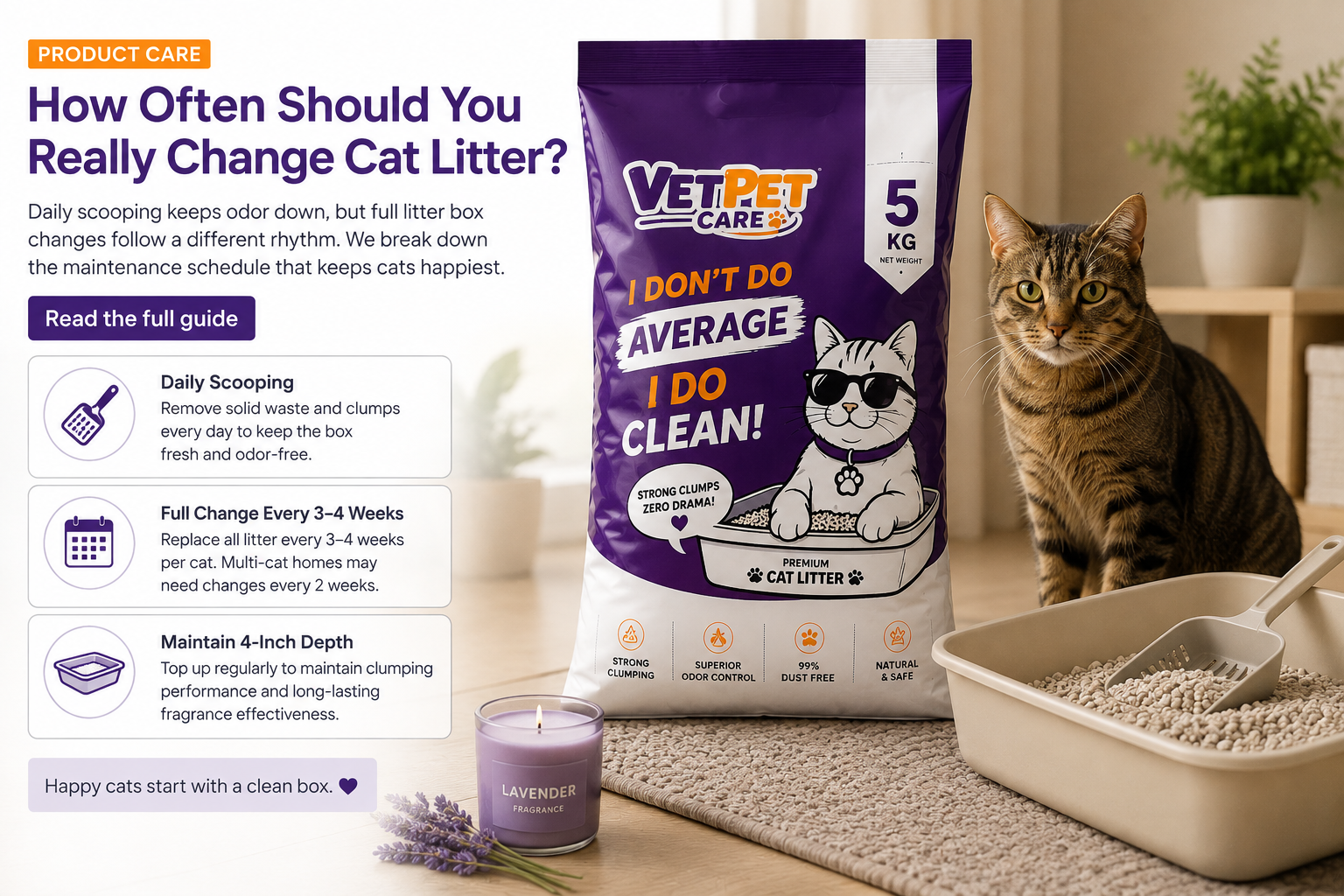
- Size up. A mat roughly 60cm x 90cm gives 2-3 full paw cycles before the cat reaches open floor.
- Shake the mat out over the litter box daily so trapped granules go back where they belong instead of building up.
Box setup changes that reduce tracking
| Feature | Effect on tracking |
|---|---|
| High-sided open box | Contains kicked litter better than a shallow tray |
| Covered / hooded box | Traps most digging debris inside; needs good ventilation |
| Top-entry box | Very effective, but not all cats adapt to climbing in |
| Litter depth over 5-6cm | Increases kick-out; keep to the recommended ~10cm fill |
Whichever style you choose, keep the box on a hard floor rather than carpet - it makes any stray granules easy to spot and sweep up before they spread.
Why the litter itself matters
Granule size, weight and dust level all affect how much litter leaves the box on a cat's paws:
- Larger, uniform clumping granules are heavier and less likely to wedge between paw pads than fine or powdery litter.
- Low-dust formulas mean less fine residue gets carried out as a visible dust film on floors and furniture.
- Consistent granule shape reduces the crumbly fragments that are the main source of tracking. VetPet Care's 99% dust-free bentonite uses rounded, uniform granules for exactly this reason - alongside gentler contact for sensitive paws.
Quick fix checklist
- ✔ Place a ridged trapping mat directly at the box exit
- ✔ Switch to a high-sided, covered, or top-entry box if kick-out is heavy
- ✔ Fill to the recommended depth - not more
- ✔ Use a dust-free, uniform-granule clumping litter
- ✔ Vacuum or sweep the mat and surrounding floor daily
- ✔ Position the box on hard flooring, away from carpeted walkways
Stocking or importing cat litter?
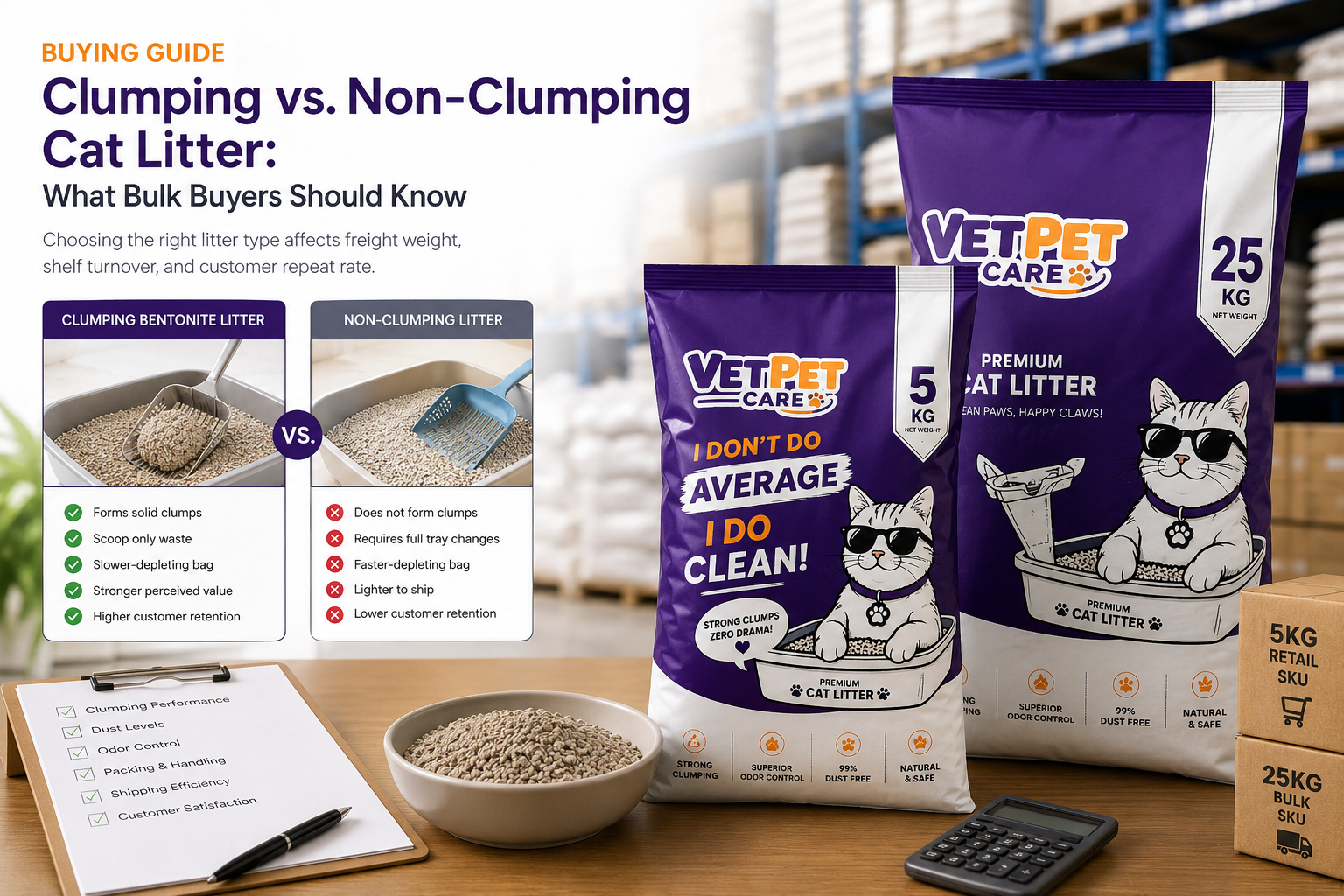
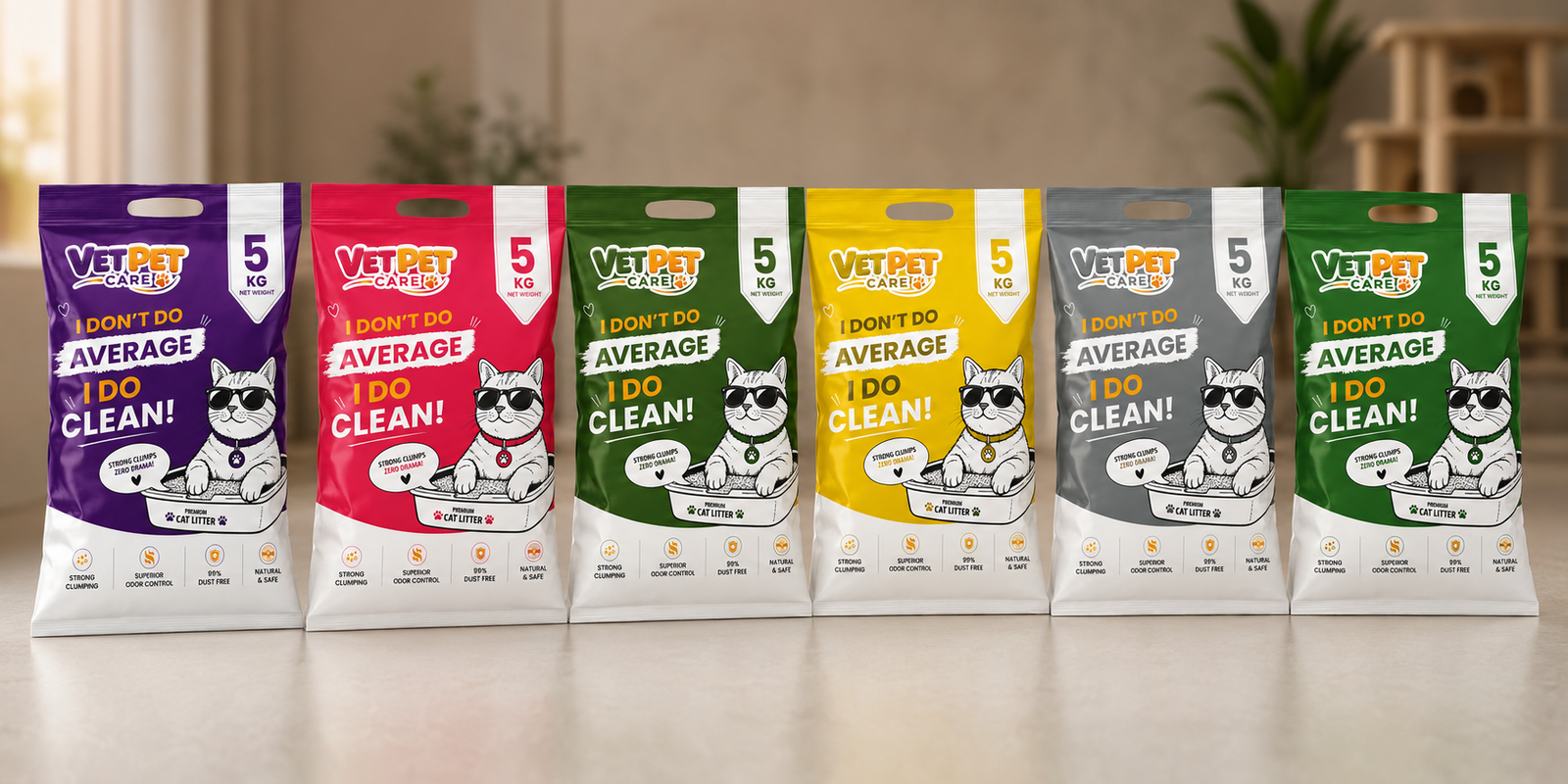
VetPet Care manufactures 100% natural bentonite clumping litter in 5kg and 25kg bags, six fragrances, with private label options. Get export pricing within 24 hours.
Request Export Pricing →