Is Cat Litter Dust Bad for Cats and People? What "Dust-Free" Really Means
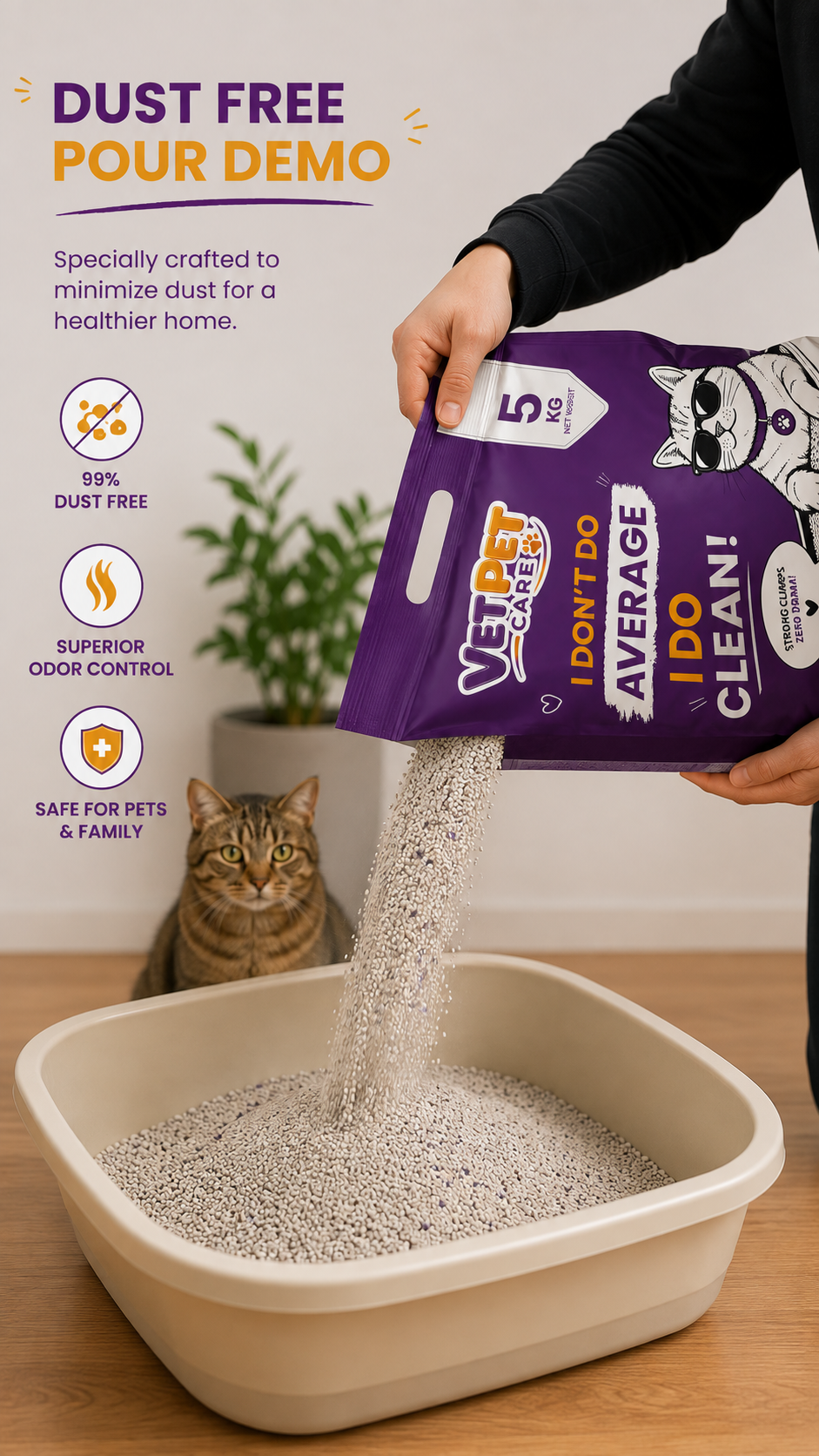
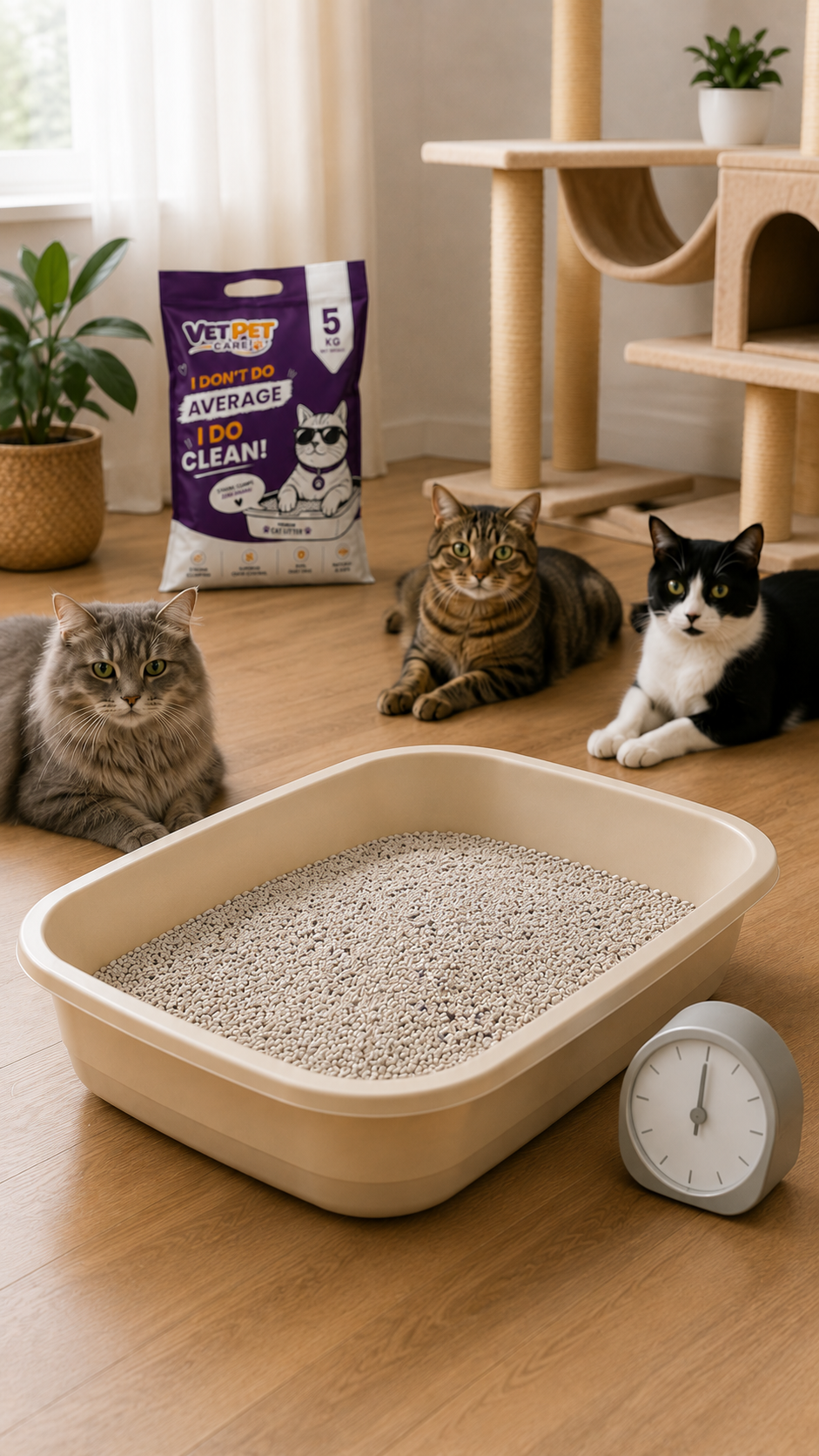
Open a bag of cheap litter and pour it, and you'll often see a fine cloud rise into the air before it settles on the floor, the tray, and everything nearby. That cloud is more than a cleanup nuisance — it's the same dust your cat breathes in every time it digs, and the same dust you and your family breathe in every time you refill the tray.
In this guide
Where cat litter dust actually comes from
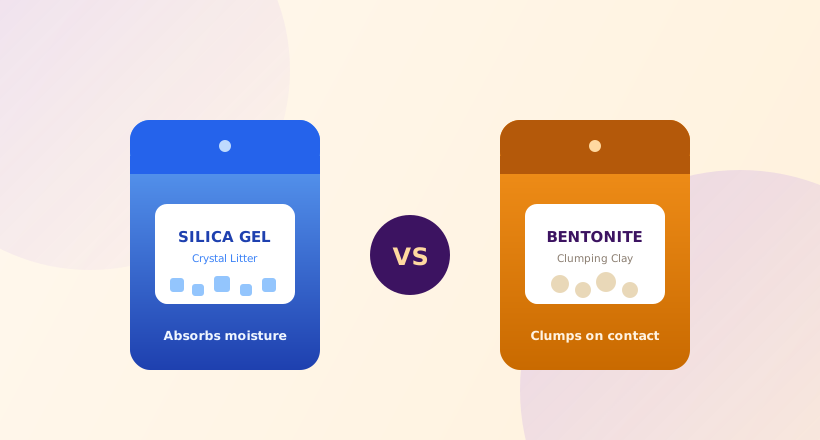
Most cat litter dust is simply fine particulate left behind from how the raw material was mined, crushed, and dried. Bentonite clay and silica gel are both processed from mineral deposits, and even after screening, a portion of ultra-fine particles remains mixed in with the usable granules. Every time the bag is poured, the tray is scooped, or a cat digs and buries waste, that fine fraction gets kicked into the air.
Lower-grade litters tend to carry more of this fine fraction because they've been screened less carefully during manufacturing, which is why some bags produce a visible cloud on pour while others barely raise any dust at all.
What dust exposure does to cats
Cats spend more time close to litter dust than any human in the house — their faces are inches from the tray every time they dig, bury, and cover waste, often several times a day. For most healthy cats, occasional exposure isn't a serious concern. But repeated, daily exposure in an enclosed tray can irritate the airways over time, and it's a real problem for cats that already have sensitive respiratory systems.
- Feline asthma and bronchitis. Cats with these conditions can see symptoms worsen with ongoing exposure to airborne litter particles, similar to how dust or smoke aggravates human asthma.
- Sneezing and eye irritation. Fine dust settling near the face can trigger sneezing fits or watery eyes, especially in an enclosed or poorly ventilated litter area.
- Avoidance behavior. Some cats will avoid a dusty tray altogether, which can lead to litter box aversion and accidents elsewhere in the home.
What dust exposure does to people
Household members are exposed to litter dust mainly during pouring, scooping, and full tray changes — brief but repeated moments that add up over weeks and months, especially in a small laundry room or bathroom with limited airflow.
The main concerns for people are similar to any fine airborne particulate: throat and eye irritation, aggravated allergy symptoms, and worsened asthma in household members who already have respiratory sensitivities. Young children and elderly household members, who may spend more time at floor level or have more sensitive airways, are typically more affected than others.
| Litter type | Typical dust level | Why |
|---|---|---|
| Low-grade non-clumping clay | High | Minimal screening during processing leaves more fine particulate in the bag |
| Standard clumping bentonite | Moderate | Better screened, but fine dust still forms during handling and clumping |
| Dust-free bentonite (99%+) | Low | Fine particles are removed during processing, verified by a visible pour test |
| Silica gel crystal | Low to moderate | Larger crystal granules, but crushed fragments can still create dust over time |
What a "99% dust-free" claim really means
A genuine dust-free claim refers to how thoroughly the fine particulate fraction has been removed from the finished product, not that the litter contains literally zero dust — no natural mineral litter can guarantee that. Manufacturers typically test this with a simple pour demonstration: litter is poured from a set height into a tray, and the amount of visible airborne dust is assessed against the same test on an untreated batch.
A well-formulated 99% dust-free litter should pour cleanly with no visible cloud and minimal residue left on surfaces nearby. If a "dust-free" bag still produces a visible haze on pour, the claim is more marketing than measurement — it's worth judging the product by what you can see and feel during use, not just the label.
How to cut dust exposure at home
Choosing a genuinely low-dust formula makes the biggest difference, but a few daily habits reduce exposure further for both cats and people:
- Pour slowly and close to the tray. Pouring from a height increases the distance dust particles travel before settling.
- Scoop gently. Stirring or digging through the surface aggressively re-suspends settled dust into the air.
- Place the tray in a ventilated spot. Airflow helps disperse and settle particles faster than an enclosed corner or closet.
- Use a litter mat. Trapping tracked granules at the box's edge reduces dust that gets crushed underfoot elsewhere in the home.
- Watch for symptoms. Persistent sneezing or coughing in a cat or household member near the litter area is worth discussing with a vet or doctor.
Choosing a genuinely low-dust litter
For households with sensitive cats, allergy-prone family members, or simply a preference for a cleaner home, a verified dust-free bentonite formula addresses the problem at the source rather than managing symptoms around it. VetPet Care's bentonite clumping litter is manufactured to a 99% dust-free standard, poured and tested visibly rather than only claimed on the bag.
Distributors and importers evaluating dust-free claims from any supplier should ask to see a live pour test on the exact batch being shipped, not a promotional video — dust performance can vary between production runs if screening isn't consistently controlled.
Stocking or importing cat litter?
VetPet Care manufactures 99% dust-free bentonite clumping litter in 5kg and 25kg bags, six fragrances, with private label options. Get export pricing within 24 hours.
Request Export Pricing →